Digital X-Rays and Impacted Wisdom Teeth
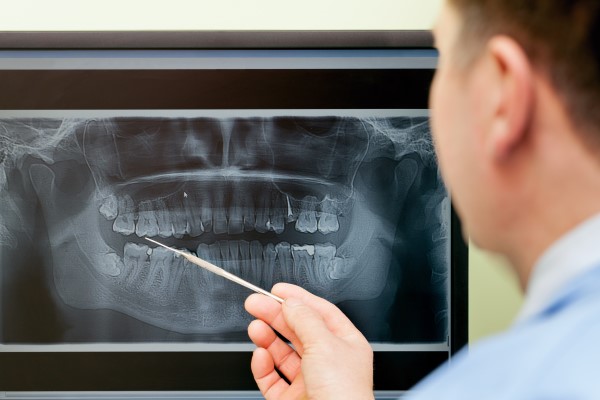
Dental x-rays are used by a dentist uses to assess your oral health. Digital x-rays use low-level radiation to obtain pictures of the inside of your teeth and gums. This allows the dentist to detect cavities, decay, and impacted wisdom teeth that may not be immediately visible to the naked eye.
The importance of digital x-rays for impacted wisdom teeth
A dental professional must use the proper diagnostic tools and techniques relevant to the intended procedure to obtain predictable wisdom tooth extractions. The panoramic x-ray (Panorex) is a diagnostic tool typically used for wisdom tooth extractions. Regular dental x-rays — like periapical or bitewing — are insufficient for wisdom teeth since they do not provide the dentist a complete view. Standard dental x-rays have a restricted field of vision; thus, the wisdom teeth are hardly seen fully.
On the other hand, a panoramic x-ray gives a complete picture of the patient's jaw and teeth. The Panorex reveals the teeth and roots, as well as their developmental phases. It also shows how they align with neighboring teeth, sinuses, and nerve canals. The Panorex allows dental professionals to evaluate, plan, and manage wisdom tooth extractions safely and efficiently.
A dental CT scan may be suggested in addition to the Panorex in individuals with severely impacted wisdom teeth or when there is evidence of oral diseases, such as jaw cysts. This aids the dentist in determining the location of the teeth, the magnitude of associated abnormalities, and the closeness to essential structures like sinuses and nerves.
Minimizing the risks of dental x-rays
While dental x-rays expose patients to radiation, the amounts are so low that they are deemed safe. The chances of being exposed to radiation are considerably reduced if the dentist utilizes digital x-rays instead of processing them on film.
The dentist will also put a lead bib over the patient's chest, belly, and pelvic area to protect their critical organs from unwanted radiation. Thyroid problems may necessitate the use of a thyroid collar. They may also be worn with the lead bib by children and women of reproductive age. The exception to this is pregnancy. The dentist will typically recommend pregnant patients avoid x-rays until after childbirth.
Getting ready for dental x-rays
No additional preparation is required for dental x-rays. X-rays typically precede cleanings. The x-ray machine is placed next to the patient's head to take pictures of the mouth. X-rays are performed in a separate room in some dental offices, whereas others perform it in the same room used for dental procedures.
When the pictures are available, which in the case of digital x-rays is almost immediately, the dentist will examine them and look for any anomalies, especially the eruption angle and position of an impacted tooth.
Ready to schedule an appointment?
Digital x-rays are typically required when a patient has an impacted wisdom tooth. The frequency of x-rays typically depends on your age, health, and dental insurance coverage. If you feel any discomfort or other changes in your mouth, be sure to contact a dentist as soon as possible.
Request an appointment here: https://drelloway.dgdevnext.com or call Randal S. Elloway DDS, Inc at (530) 527-6777 for an appointment in our Red Bluff office.
Check out what others are saying about our services on Yelp: Read our Yelp reviews.
Related Posts
Patients who have wisdom teeth extraction enjoy having better dental health. This type of oral surgery is one of the most common procedures in a majority of dental clinics. Even so, some patients still suffer from complications from the surgery. If you want to find out what complications you may have after wisdom teeth extraction,…
Wisdom teeth are notorious for not coming in well and leaving your mouth feeling crowded. There are other health concerns and cosmetic issues that can arise when these teeth are impacted. It should not be a surprise why dentists frequently recommend that these teeth come out, often before they erupt. If you decide not to…
Wisdom teeth tend to disrupt the balance of your oral environment. As these third molars develop, dental issues emerge. One of them is a dentigerous cyst. It is a fluid-filled sac that grows in the soft tissue and jawbone. Dentigerous cysts from wisdom teeth can carry dental problems. If you want to understand the dental…
You probably know people who have their wisdom teeth removed. This is a common procedure that people in their late teens to early 20s undergo. This third set of molars usually emerges before a person hits age 25. If you are in this age range, it is time to talk to your dentist. If these…