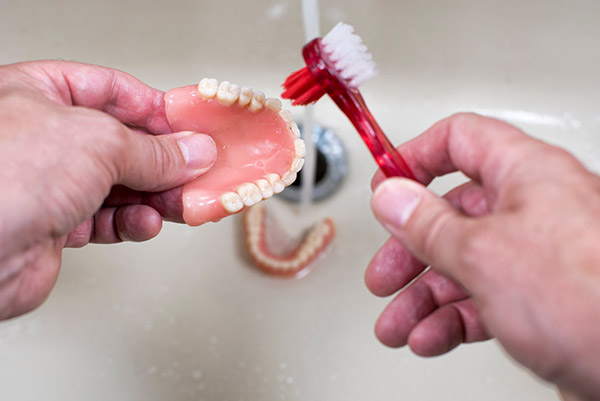
If you are new to the denture world, you may be confused when you think of toothbrushes and denture care. Most people have this misconception that since you have dentures, you no longer have to brush your teeth. This statement couldn’t be any more wrong. Brushing is just one important step in caring for your new dentures.
Brush your dentures daily
One of the first most important steps in caring for your new smile is learning how to brush your dentures. Get a soft bristle brush and approved denture cleanser to clean your dentures. Start by brushing your teeth in a slow circular motion. This can help you to remove any plaque or bacteria that gets onto your dentures. This process should be done at least once or twice a day for the most benefit.
Toothbrushes: which kinds are best?
Dentures help to restore the functionality of your daily life. But when you are thinking about proper denture care, what type of toothbrush should you be using? Yes, you should use a soft bristle brush, but what kind?
You can choose between various soft bristle toothbrushes that are gentle enough for your dentures. There are specific denture brushes marketed just for dentures. While these are gentle enough to clean your dentures thoroughly, you can use a regular soft bristle brush if it’s approved by your dentist.
What about electric toothbrushes? You really should avoid electric toothbrushes when you have dentures. Electric toothbrushes, while they may have soft bristles on them, can be damaging to your dentures.
Don’t forget to take care of your mouth
To maintain your denture’s look and feel, you should be sure to take care of your tongue, gums, and the roof of your mouth. If your gums and mouth are not properly cared for, your dentures can stop fitting properly. Brush your gums at least two times a day to help stimulate them and keep them clean. You will also want to get into the habit of rinsing your mouth out when you wake up, between meals, and before bedtime.
This will help to keep your mouth clean, healthy and prevent any inflammation associated with wearing dentures.
Soaking your dentures every night
This is not just something that your grandmother did. In fact, for good denture care, you should soak your dentures for at least 6 to 8 hours every night. Soaking your dentures will help them to stay moist and keep them from drying out. If dentures become dry, they are at an increased risk of becoming brittle and cracking or breaking. If you want to extend the life of your dentures, you should always soak them at the end of the day. In fact, soaking not only benefits your dentures but also benefits your mouth. This gives your mouth the time it needs to heal and recover from the stress of holding your dentures in place all day long.
Related Posts
Dentures can be a great way to replace missing teeth, but they require regular denture care and maintenance. In fact, dentures can last for ten or more years with proper denture care. How long dentures will last depends on how well and how often you take care of them.Dentures rarely need repairs, but dentists recommend…
When you are new to wearing dentures, you have many questions involving your denture care. Some people who wear dentures and do not have any natural teeth left believe they no longer need to see their dentist regularly like they used to. For many reasons, making sure you still see your dentist for regular appointments…
Denture care is one of the most essential steps in preventing gum disease. Gum disease can lead to tooth loss and other health issues like heart disease, stroke, and diabetes. Dentures are a common and vital dentistry tool dentists use to repair tooth damage, fill cavities or even replace missing teeth. Dentures play a considerable…